Understanding heel and arch discomfort through load, circulation, and long days on your feet
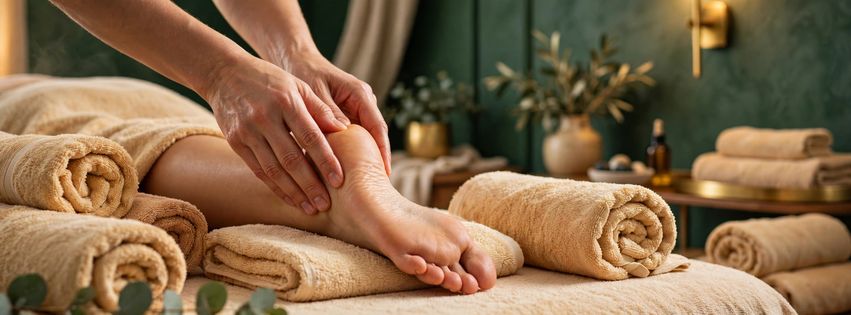
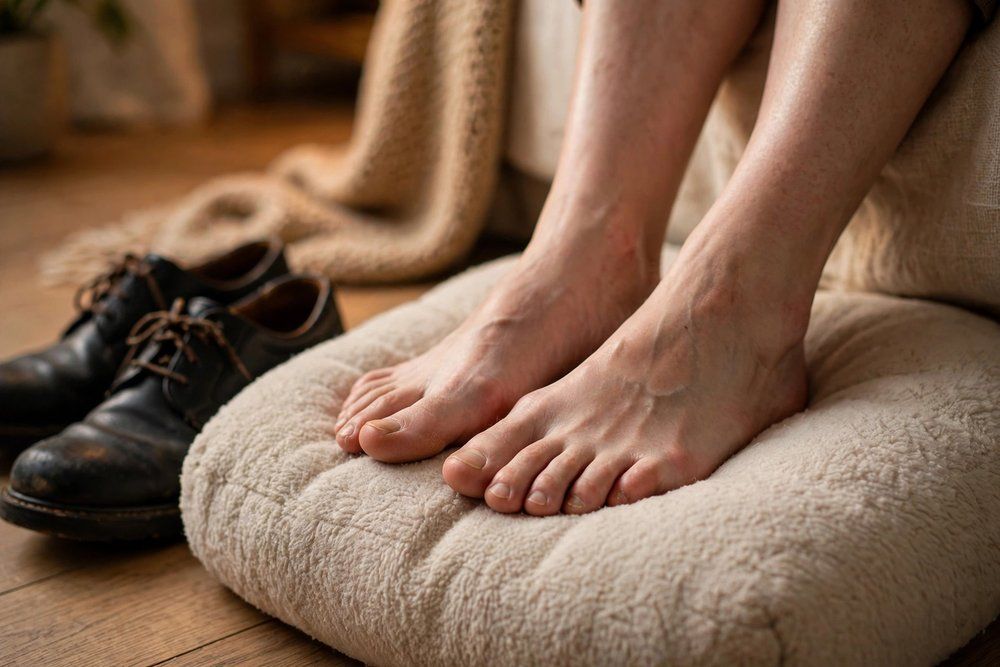
Your feet carry your full body weight through thousands of steps a day. Along the sole runs a strong band of tissue — the plantar fascia — that supports the arch and absorbs load with every step. When that band and the surrounding tissues are strained day after day, the result is often heel or arch discomfort: a sharp or aching feeling with the first steps in the morning, or feet that simply ache by evening.
The most common driver is load without enough recovery. Jobs that keep you standing or walking on hard floors for long hours — healthcare, retail, teaching, warehouses, kitchens — keep constant pressure on the fascia and the small muscles of the foot. Add worn or unsupportive shoes, and the strain accumulates faster than the tissue can settle.
Activity changes can trigger it too. A sudden increase in walking, running, or exercise after a quiet period asks the feet to absorb far more than they are conditioned for. Tight calves make it worse: when the calf and Achilles area are stiff, each step pulls harder through the heel and arch.
From a Traditional Chinese Medicine (TCM) perspective, the feet are also a foundation of whole-body circulation. Several major pathways begin or end in the feet, and when circulation to the lower legs and feet is sluggish — from long sitting, cold, or overall depletion — tissues recover more slowly and discomfort lingers longer.
Body weight and age play a background role as well: more load per step, and tissues that gradually lose some of their spring, mean the same day of standing costs more than it used to. This is why foot discomfort often creeps up gradually rather than arriving with a single injury.
From this holistic viewpoint, foot and heel discomfort develops through the combined effects of repeated load, tight connected tissues, footwear, and slow lower-body circulation — which is why support looks at the feet together with the calves and daily habits, not the sore spot alone.
Our approach is grounded in classical Traditional Chinese Medicine (TCM) theory, where the body is viewed as an interconnected whole. Rather than focusing only on the spot where discomfort is felt, we also consider how overall balance and daily habits influence how that area feels.
We begin with a conversation and an observation-based wellness assessment — looking at posture, movement, work and rest patterns, and what tends to trigger your discomfort. This helps us understand how circulation, tension, and everyday load may be interacting, and what factors may be contributing to the body’s imbalance.
Sessions use hands-on therapeutic massage techniques, always adjusted to your comfort level. Support is personal and gradual — never one-size-fits-all.
We do not simply chase a single sore spot in isolation. We consider how different areas and systems influence one another, and we pair sessions with simple suggestions for daily habits, rest patterns, nutrition, and gentle corrective movements, so support continues between visits.
When discomfort has been present for a long time, it may involve not only physical strain but also a heightened sensitivity of the nervous system. In those cases the process is more patient and gradual, focused on restoring balance and reducing overall load.
Overall, our work is rooted in foundational TCM principles, with a strong emphasis on holistic thinking, personalization, and flexibility. Supporting the body as a whole — and respecting each person’s unique situation — is at the core of how we work.
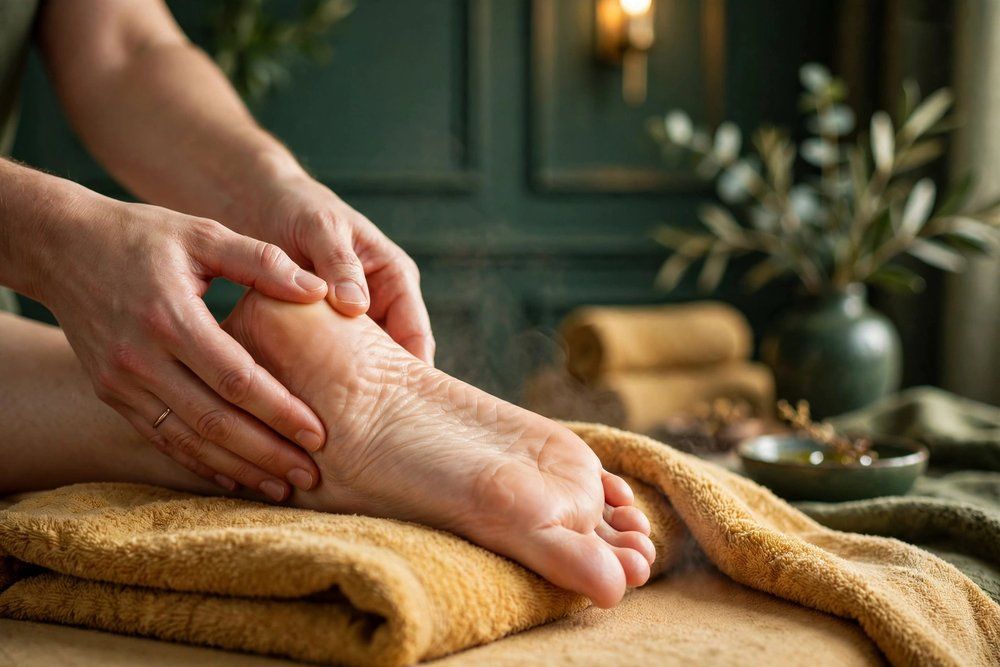
This page focuses on foot, heel, and arch discomfort — including plantar fascia strain — explained through load, connected tissue tension, footwear, and lower-body circulation, using a holistic, consultation-based approach.
Discuss your current discomfort and explore personalized, non-invasive support options.
Mon–Sat 9:00 AM – 6:00 PM · By appointment
or call / text (832) 396-2888